Setting the Baseline Before You Roll
There is nothing quite like the sound of a group rolling out together, but if the pace is set wrong, that camaraderie quickly turns into frustration or worse. Around here, we have learned that a successful group ride starts long before the engine turns over. It starts with a quick pre-ride meeting where we honestly assess the group. The golden rule we follow is the least common denominator. The pace should be dictated by the least experienced rider, not the fastest sportbike in the pack. If you are riding a heavy cruiser and someone else is on a lighter street bike, or if you are just getting comfortable with two-up riding, your comfort level sets the speed for everyone. Establishing that baseline together prevents the common mistake of the group splitting before you even leave the parking lot.
We also take time to match skill and machine to the road. If there is a massive speed differential, splitting into sub-groups makes sense. The fastest riders should naturally take the back as the Sweep. This keeps the main group moving at a manageable pace while ensuring that anyone who needs a little extra room or time to catch up has experienced riders watching their six. Road conditions dictate the rhythm too. On long, straight stretches, it is perfectly fine for the group to spread out and find individual paces, provided we keep communication open. On twisty, curvy backroads, the pace drops significantly so everyone can hit their lines safely. The goal is always to ride your own ride. If you are struggling, signal and pull over. Pushing beyond your limits to keep up is how good rides turn into bad stories.
Staying Together Without Stifling Anyone
Once you are moving, spacing and formation do the heavy lifting. We use a staggered formation, often called the pack, to keep the group tight without creating a traffic jam. The standard pattern is Left-Right-Left-Right. This gives each rider a clear view of the road ahead and creates space to maneuver around hazards without forcing the entire group to brake. The key is maintaining a minimum two-second gap between you and the rider directly in front. At higher speeds, you extend that gap. When we hit slow traffic or tight curves, we close ranks to tighten the formation and keep everyone visible.
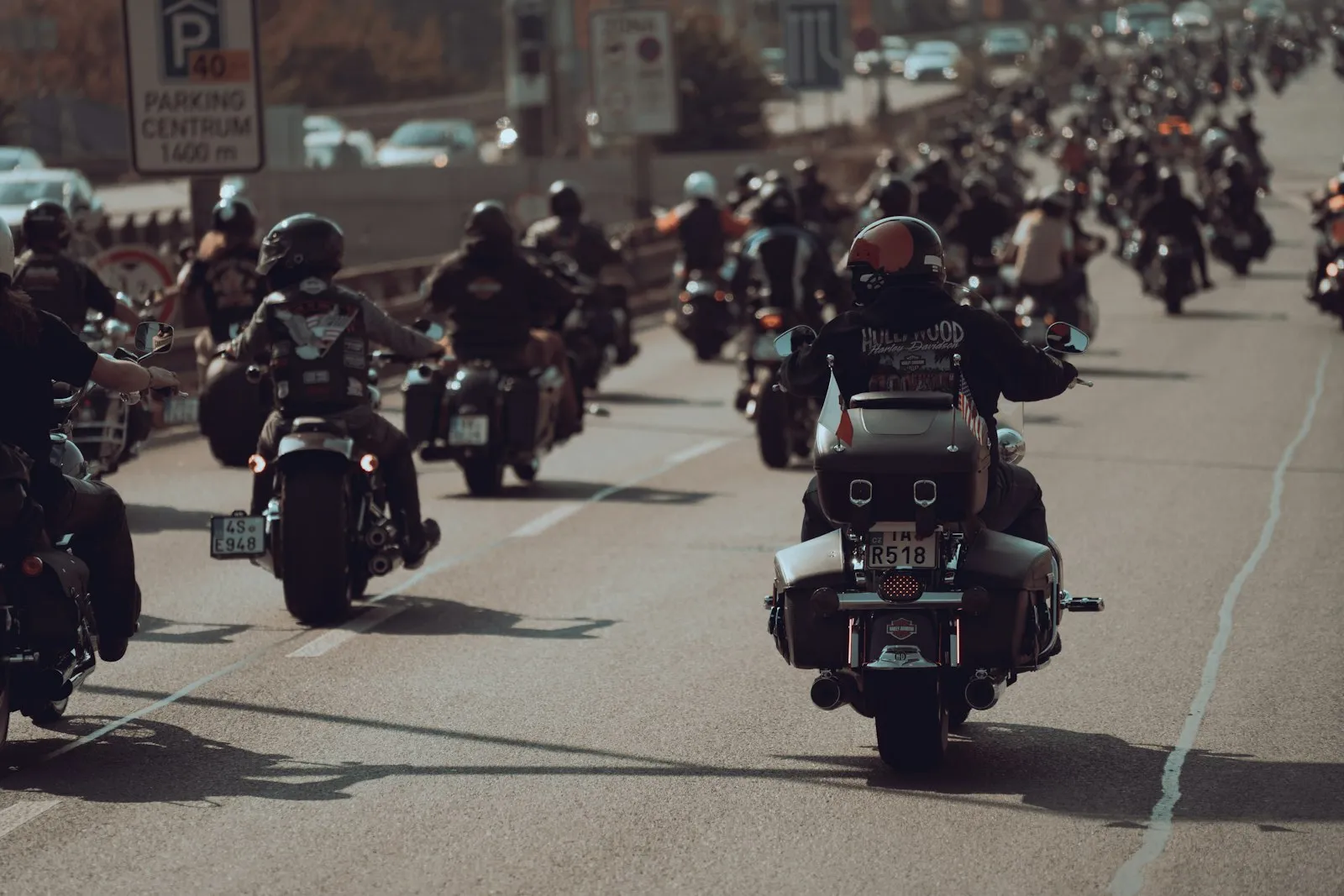
Roles matter just as much as spacing. The Leader needs to be highly experienced, know the route cold, and set a smooth, consistent speed. They should use turn signals early, watch their mirrors constantly, and avoid sudden braking. The Sweep at the back carries equal responsibility. If someone falters, the Sweep signals and pulls over to assist them. This simple protocol prevents the main group from getting separated and ensures no one gets left behind on the shoulder. We also establish a clear wait strategy before we leave. If the group gets separated at a traffic light, do we pull over immediately, or do we regroup at the next major intersection? Having that answer ready prevents the dangerous bunching up that leads to tailgating and rushed maneuvers.
Handling Curves, Stops, and the Sweep
When we approach a twisty section, dropping the stagger and riding in a single-file line is non-negotiable. This prevents riders from cutting corners or running wide, which is the most common cause of pace disruption and crashes in groups. It also keeps the formation predictable. We remind each other to avoid being the rider who delays the group by fumbling with gear, checking phones, or stopping for non-essential reasons. Preparation happens before the ride, not in the middle of it. Communication is just as important as physical spacing. Keep your mirrors clean, use your turn signals early, and listen for the rider behind you. If you need to slow down for a hazard, tap your brake light or use a clear hand signal so the Sweep knows exactly what is happening without having to guess.
What to Remember When You Ride Together
Group riding rules are not always black and white, and flexibility is part of the skill. On long highway stretches, it is common for the group to spread out as everyone finds their own pace. The important part is maintaining awareness and communication. If you have ever taken a written driving test, you know to extend following distance as speed increases. The same logic applies here, especially when riding with different machines. Practice your hand signals, keep your mirrors clean, and trust your Sweep. When we ride together with clear expectations, safe spacing, and respect for the slowest rider, we all get home with smiles instead of stress. Take the time to plan the pace, stick to the formation, and look out for each other. That is how we keep this community rolling safely for years to come.
Finish this story. It's free
Create your free District 76 account to read the rest, save articles, and join the discussion.
Already a member? Log in
Roads worth riding
Community-rated routes from the D76 road guide.
- Old Lock B Boat Rampin TN
- FS141 to Persimmon Pointin KY
- Natchez Trace Parkway (TN)in TN
- Fort Donelson Ride Outin TN
0 Comments
Sign in to join the discussion.
- No comments yet. Be the first to weigh in.