What the Two Finger Drop Actually Means
You have probably seen it a hundred times. Two riders pass each other on a back road, and one or both drop a couple of fingers toward the asphalt. It is quick, it is simple, and it means more than just a greeting. Around here, we call it the bike salute, the biker wave, or sometimes just the two finger drop. It is one of those unspoken traditions that instantly connects us to riders we have never met before. When you see it, you are looking at a gesture that says I see you, and I want you to stay safe.
This tradition is not about showing off or claiming territory. It is a visible reminder that we share the same exposure to the elements, the same vulnerability on the road, and the same passion for two wheels. It represents freedom, independence, and belonging to a community that values safety and camaraderie. Whether you call it the V sign, the biker wave, or the two finger drop, it is a ritual that keeps us connected across state lines and engine sizes.
Where the Tradition Started
The exact origin is a bit fuzzy, but most of us trace it back to the early days of American motorcycling, around 1904. William Harley and Arthur Davidson are often credited with starting the practice when they greeted each other on their machines. By 2024, the gesture celebrated its 120th anniversary. Some European riders point to British legend Barry Sheene, who famously raised his index and middle fingers in victory, while others joke about English archers from the Hundred Years War showing two fingers to the French. The truth is probably simpler. During World War II, British Army motorcycle messengers used the V sign to signal victory and solidarity. After the war, returning bikers carried that gesture into civilian riding, and it stuck.
How to Do It Right
If you are new to riding, you might wonder about the mechanics. The rule is straightforward. Always use your left hand. Your right hand stays on the throttle and front brake. You extend your index and middle fingers in a V shape, keeping them pointed downward at or slightly below handlebar height. It is not a victory sign. It is a quick acknowledgment that communicates mutual respect.
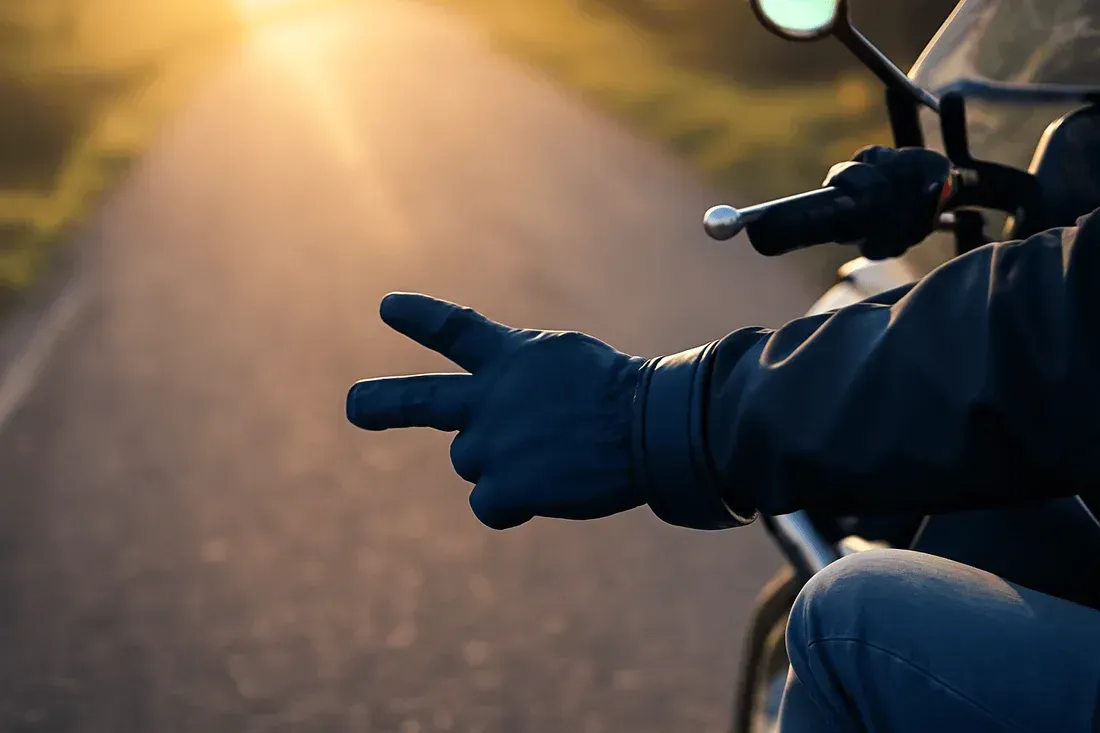
Not every rider does it the same way, and that is fine. Some of us prefer the classic two finger drop. Others give a full hand wave, which tends to come from newer riders or scooterists who want to be extra clear. Sportbike riders often just offer a quick nod because lifting a hand while leaning into a corner is a bad idea. There is also the head tilt wave, which happens when weather or traffic makes a full gesture impractical. The important part is that you acknowledge the other rider when it is safe to do so.
When to Skip the Salute
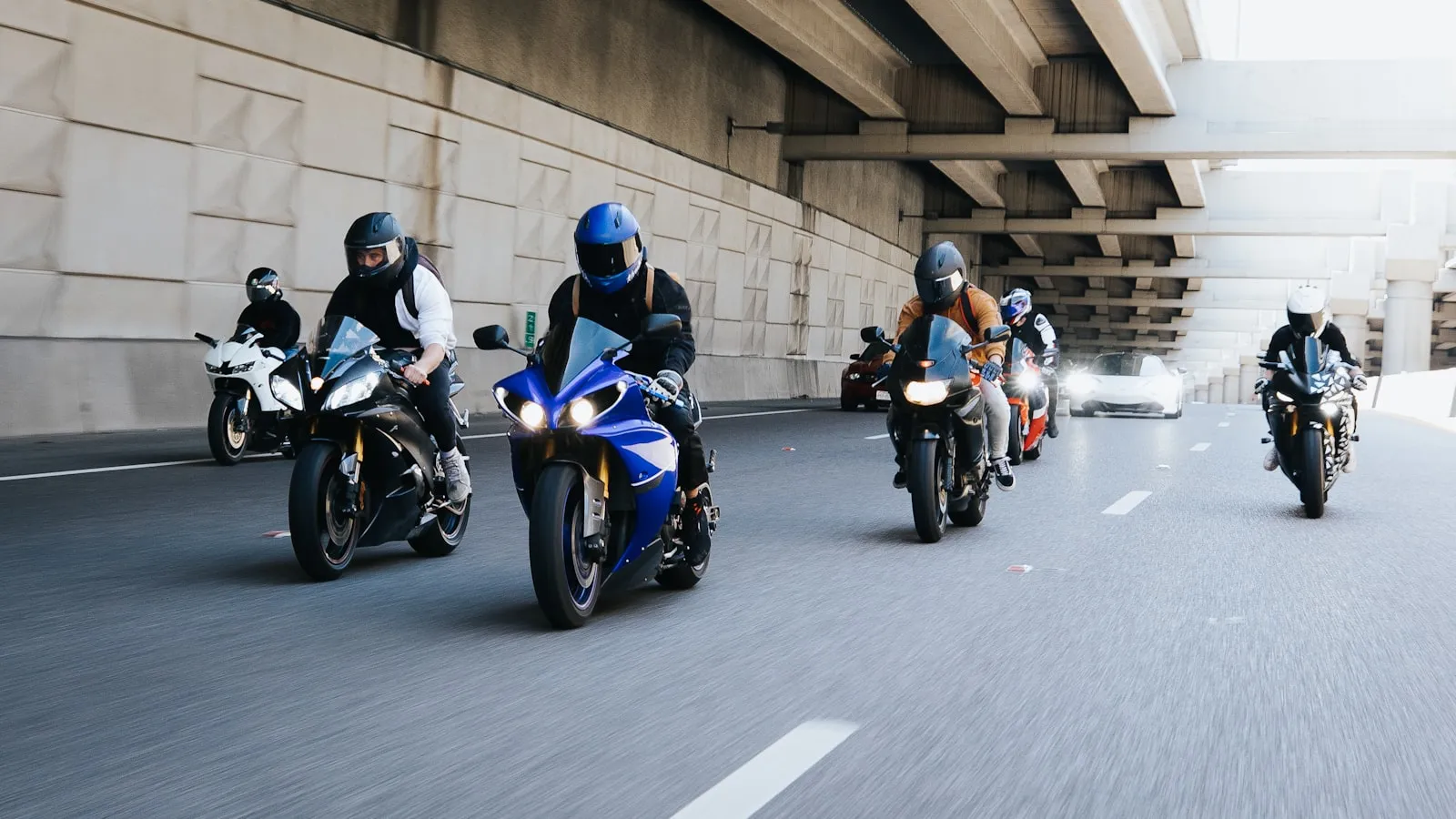
Safety always comes first. You should never wave while cornering, braking hard, or riding in a tight pack where you have to let go of the bars repeatedly. Freeways are another place where the salute rarely works, and it can actually confuse drivers who do not know what it means. Rain and darkness reduce visibility, so sometimes the safest salute is just staying alert and keeping your lane.
Novice riders may feel reluctant to wave at first because they are focused on balancing and controlling the machine. That hesitation is completely normal. As you gain confidence, you will naturally find your rhythm. If you are riding in a tight group, passing riders one by one, you will quickly learn that stopping to wave constantly breaks the flow and can actually create a hazard. Just keep your eyes up, your hands on the bars, and your speed steady. The salute should never compromise your control.
The Unspoken Rules of the Road
There is a bit of debate around who gets the salute. By tradition, it goes to every motorcycle, regardless of engine size. You will see us wave to 125cc commuters and 50cc scooters just as readily as we wave to big twins. Some purists might side eye smaller bikes, but the general feeling around here is that anyone earning the road deserves a nod. Not waving back can cause unnecessary drama. Sometimes the other rider simply did not see you, was focused on a hazard, or was riding in a tight group. If you miss a wave, do not take it personally. Just keep riding.
The bike salute is a quick way to say we are all in this together. It does not matter what you ride or how long you have been riding. If you are on two wheels, you are part of the community.
Why It Still Matters
At its core, the bike salute is about brotherhood and mutual respect. We share the same exposure to the elements, the same vulnerability on the road, and the same passion for two wheels. It is a visible reminder that we look out for each other. It represents freedom, independence, and belonging to a community that values safety and camaraderie. Whether you call it the V sign, the biker wave, or the two finger drop, it is a tradition that keeps us connected.
Next time you head out, keep your right hand on the throttle, drop your left hand when it is safe to do so, and remember what that gesture really means. It is a quick way to say we are all in this together. Ride safe, watch your corners, and keep those two fingers pointed down.
Finish this story. It's free
Create your free District 76 account to read the rest, save articles, and join the discussion.
Already a member? Log in
Roads worth riding
Community-rated routes from the D76 road guide.
- Old Lock B Boat Rampin TN
- Fort Donelson Ride Outin TN
- Natchez Trace Parkway (TN)in TN
- Excell McAdoo Loopin TN
0 Comments
Sign in to join the discussion.
- No comments yet. Be the first to weigh in.